


Giving time back to teams: the real competitive advantage in customer service
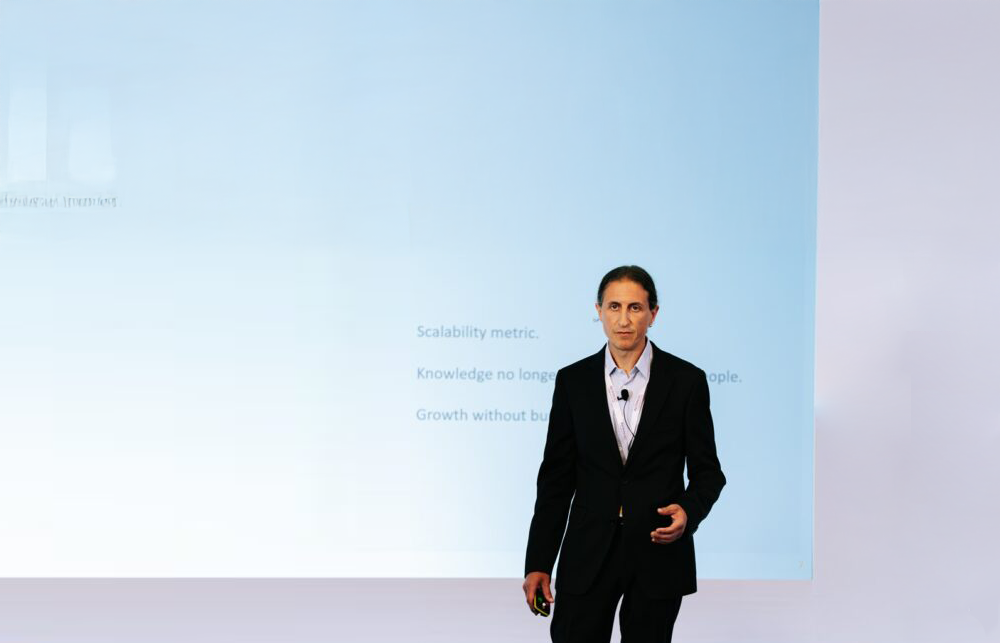
Gerard Roca
IT Business Partner at Audax
Over the past few years, the conversation around Artificial Intelligence has almost always gone in the same direction: automation, cost reduction, and task replacement. However, when we look at its real impact within organizations, perhaps we should be asking a different question.
At Audax, we understand that the real value of AI doesn’t lie in replacing people, but in something far more important: giving time back to teams. Time to analyze more thoroughly, make better-informed decisions, and, above all, focus on what truly matters in a company that interacts with thousands of customers every day: serving them properly.
Customer service as the business’s moment of truth
In sectors such as energy or telecommunications, operations are where the company truly meets the customer. An invoice, an issue, a phone call, or an administrative request aren’t just internal processes: they’re key moments where trust is either built or lost.
This function is often seen as a set of operational tasks. But in reality, it’s far more complex, as it combines processes with a strong human dimension. Customers switch channels, don’t always follow established procedures, and expect quick, consistent, and effective responses. Every interaction has a direct impact on their experience.
In an energy supply company, for example, operations teams handle contracts, supply issues, billing, or relationships with distributors. But above all, they manage expectations, doubts, and uncertainties. That’s why customer service can’t be measured solely in terms of speed. It’s not just about responding faster, but about resolving issues better.
And this is where AI starts to show its true potential: enabling organizations to evolve from a reactive culture to one centered on resolution.
From scattered information to accessible knowledge
In many companies, the problem isn’t a lack of knowledge, but its accessibility. The information exists, but it isn’t always available at the right time or in a consistent way.
AI systems applied to operations aren’t meant to replace teams, but to act as a layer connecting people with relevant knowledge the moment they need it. And their most immediate impact isn’t technological, but human.
When the right information is found sooner, confidence in decision-making increases. When an issue is resolved on the first interaction, escalations and rework decrease. And when customers don’t have to repeat the same problem multiple times, the company’s perception improves immediately.
Learning faster, working better
One of the most relevant indicators in this context is Time to Competency, meaning the time it takes for a person to become fully autonomous in their role.
Adopting AI-based tools can significantly reduce this time, by around a third in many cases. This not only speeds up the learning curve but also has a direct effect on the organization: junior profiles gain confidence sooner, and senior teams spend less time on informal support, preventing knowledge from being concentrated in just a few people.
The result is a more balanced, more resilient organization that’s less dependent on specific individuals.
Resolving on first contact
Another key indicator is First Contact Resolution. When teams have access to contextual information and the right tools, their ability to resolve issues correctly on the first interaction can increase by around 7%.
This shift transforms day-to-day operations: fewer escalations, less duplicate work, and greater consistency in decision-making.
The real indicator lies outside the organization
Beyond internal indicators, there’s an even more important element: the customer experience.
Customers don’t perceive metrics like KPIs or operational ratios. They perceive effort: how many times they have to explain their problem, how many calls they need to make, or how long they have to wait for a solution.
When that effort decreases, the relationship with the company improves immediately. In many cases, the number of interactions needed to resolve an issue can drop by around 12%.
That’s the point where operations stop being just a support function and become a true competitive advantage.
From efficiency to experience
In an environment where products and prices tend to become increasingly similar, customer experience becomes a decisive factor. And that experience largely depends on an organization’s ability to respond quickly, consistently, and with a human touch.
AI shouldn’t be seen solely as a tool for automating processes, but as a way to eliminate friction and allow teams to focus on what matters most: understanding, deciding, and resolving.
Perhaps that’s why the conversation about Artificial Intelligence should start with a different question: how much valuable time it can give back to the people who use it.